

Dear Ma Naveen,
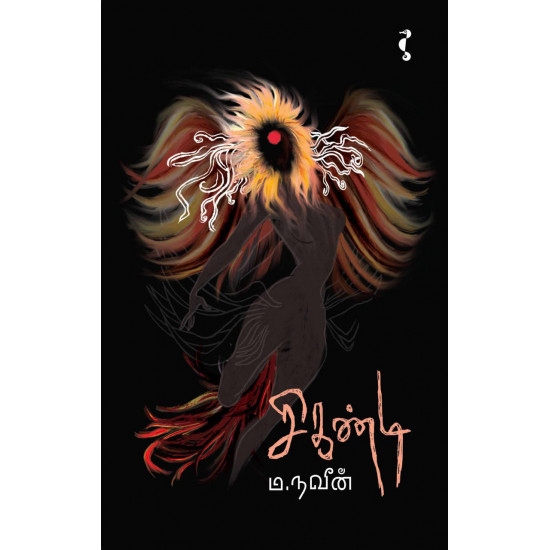
Myself Vasanth from Cuddalore. I completed reading Sikandi last night. I thought I could write about my reading experience.
My personal favourite is Leo Tolstoy, and Jeyamohan. I have almost read all fictional works of Je including Venmurasu. So, during this letter let me share how Sikandi impacted me relative to my favourite author’s works.
I read War and Peace in my final year of Bachelor Studies (Civil engineering). Until then, I was highly self-centric. Being a teenager, I had big dreams, and thought world is under my feet. Though, during those days, I was reading complete works of Swami Vivekanandha, philosophy had little impact on altering my character. The biggest treasure and takeaway from War and Peace it broke my ego into pieces. Like, a glass fallen from roof top. It hugely shattered my self-centric view of the world. Tolstoy entered my heart as first tender love enters someone in their youth. War and peace was the first novel that has shown me the impact of fictional literature in influencing human behaviour. It’s power to speak to the soul and shatter the social conditioning.
After my bachelors, I went to Sweden for master’s in environmental engineering. I had experienced mild racism. Tolstoy’s works helped me navigate my tough times. Instead of feeling hatred, it helped me to remain kind. After completing my master’s I came back to India to follow my research dreams. I wanted to develop a nature-based solution in wastewater treatment instead of the mechanistic solution of the west.
Two things were happening simultaneously. One given the Indian context, I needed alternate Vision other than Tolstoy to thrive in competitive Indian business world. And the second thing is the latent craving to read Classics in Tamil. Je was the answer to both. I read Venmurasu and completed in 18 months. Most of the time, during that period, I had nothing else to do other than staring the wall in front of me. Venmurasu made me more of a warrior who stands up and fight for the justice one trusts.
You would have noticed that I take literature as a device to make me a better person. Practical impact and relevance of literature in influencing my behaviour, I considered is paramount. How it shapes my character, how it helps to pursue my work, play the game at the highest level, how it makes me a better human. Liberation of heart from conditioning is for me the magnificence and treasure of literature.
——
Now, let me enter the world of Sikandi
Language aesthetics
Sikandi for me is one of the finest work read in my recent times. The novel’s language is its biggest strength. It is so dense and impactful. From Sundara Ramaswamy, Je probably got his aesthetics influence. Je’s language aesthetics is at its best in Kaadu, Ezham Ulagam and Venmurasu. Sikandi for me is on par with Kaadu in its aesthetic sense. The language is so dense and aesthetically subtle. A reader can easily miss micro details if he is carried away by the narrative. The languages open a parallel world in the mind of the reader. The reader starts living so deeply and intensely in the world novels create evokes.
Metaphors, Images and philosophy
Few of my observations during the reading
Crow and Women’s scream
In page 42, Crow’s scream during volatile situation is compared with wife’s constant scream. The Crow’s scream is not because of anger, but of fear that’s the case of the youth’s wife too. I found this profound and impactful.
Land, and authority
In page 88, When Eebu says” Anything can grow in soil. Hence, fight for soil/land is constantly happening. How much can one run? If your heart says, this is the land for you, don’t leave it whatever happens”.
Fear and fearlessness
In Page 128, The comparison of house dogs that knows thy and fearless humans
How the innocence of Deepa‘s heart gets reflected in face irrespective of beard and moustache. This innocence of his face is here important as we can see in the last, that Eebu says when he came to meet for first time, his face was not innocent but of a thief (kallathanam).
In page 224, again the author shares how fearful people, scream and shout, while the fearless men remain calm and silent.
In page 401, Businessmen are sharp, but not when tensed.
In page 419
Kaasi says, those who respect killing, fear it. One must get practiced killing. Once practiced, the excess respect to kill will fade away.
How art Works
In Page 210, How the artist realises that he can’t draw a line, without “God” entering him. The God characters were in his mind, but they opposed to enter his heart. This helps the reader to understand how art establishes in an artist.
In page 252, When Sra says, she is dancing Bharatam for her own happiness, rather than for others to appreciate.
Faith and Philosophical words
In Pag 225, Learning about one’s ignorance is also wisdom. Sounds, like an Advaita vision.
The author’s philosophy is narrated here. How, small human beings’ problems are when compared to the mighty universe. But indeed, these small problems are used as instruments for better understanding of the universe.
It reminds me how Brahman uses Maya as tool to reveal itself.
In Page 304, When surrendered, mind becomes clearer.
In Page 309, When one starts to stay away, they start observing. And once, they start observing, they find justifications for staying alone.
In Page 311, How the voice of the early morning prayer in the mosque Is magnificent as one has surrendered all his pain and sufferings to its lord.
In Page 322, The mind of a person can break one’s body, irrespective of the physical strength. [I took this statement so seriously, I couldn’t meditate the next day]
In Page 420, Fire is like a seed. When seeds fall, it transforms into something else. Fire does the same.
Protagonist Musings and thoughts
In Page 247
It’s moving when he says he must let his mom knows that the world is far more cruel/dirtier than hiw own house and how people is bad when compared to his father. Probably, anyone living outside from their home for first time, will realise sooner or later as he did.
In Page 383
I was detachedly seeing the face of the people who went in search of physical body.
Why do people go to a prostitute? I don’t see happiness in their face when they return. Then why do they go?
In page 389, When Eebu asks, “you want to settle quickly without any pain?”Conveys Eebu’s understanding about Deepa’s character.
About Kindness
In page 466
Sra says, “Those who are too kind, their body and face become tender. Women are the ones who can show magnificent kindness. Have you seen the face of Gandhi, Buddha, and Vallalar? Their face is filled and displays only magnificent kindness. To withstand the overwhelming kindness out of our heart, one must become a woman, no other way.
We can see later at the end Sra becoming a woman, and mother purely out of kindness when she says to Eebu that he doesn’t need marriage anymore, as she has become a “mother”.
We also see Deepa experiencing the feeling of motherhood at the end, when he cuts off his lizard. The lizard that gets erected when he kills Sra, gets cut off. It’s the transformation of man to a woman, to motherhood. From egoistic male to all prevailing “mother.”
—–
Decoding Sikandi with what is written in the novel as I have highlighted above, is undermining the magnificence of the work. Sikandi is a deep, profound and intense reading experience. I have shared some apples of the tree. A literary reader must go subtle and deeper to experience the roots of the novel, the vision it evokes.
The novel can reach the dreams of the reader’s mind with its unique language. I had a tough time even breathing, felt trapped, when all doors of the protagonist felt locked in the middle of the novel. That’s the kind of lived experience which Sikandi can entrap.
Ma Navin with Lion’s roar establishes him as a master writer. The Peraram (Moral/ethical standpoint) he stands for is magnificent kindness, which is so inclusive. As a normal person, I too have lot of prejudices on the Thirunangai community. With a surgical knife, he cuts away the social conditioning embedded in the minds of the reader. The Thirunangai community’s overwhelming kindness, motherhoodness is portrayed as the vision of the novel. How hard a man must try to become cruel is portrayed. It included killing a cat, monkey mercilessly, finally a girl/human, how hard it is, how spiritually a man must be dead conditioned to act this way is depicted. From being a child face person, Deepa become such a cruel person, without he even knowing that’s all these acts are strategically plotted for a revenge against Eebu is so well written. The fabrics of the novel all come together so organically and ends dramatically at the end. The place where reader realises Eebu was the Sikandi is breathtaking. The novel starts with the injustice that Vera does, while the novels ends where finally Deepa really mourns for the injustice he does to Sra, and throughs away the male ego tto find redemption.
Breaking the evil/cruel conditioning of a society from the mind of the reader is not an easy task. Great writers are questioning the human behaviour, the arbitrary tradition of non-inclusiveness it carries out, how it turns its back by making the fellow neighbour as “other”. They go deep into the dreams of the reader to seed their vision and breakout the existing stony conditioning. Ma Navin’s Sikandi does this intensity, ferocity, and with spiritual clarity. As I mentioned earlier, the master writer announces his arrival, that he stands with the tormented, stands with morality, with a Lion’s roar with this pen.